


.png)
On the Trail of Gold: The Role of Stagecoaches in the California Gold Rush

Updated: Aug 8
Stagecoaches in the Wild West
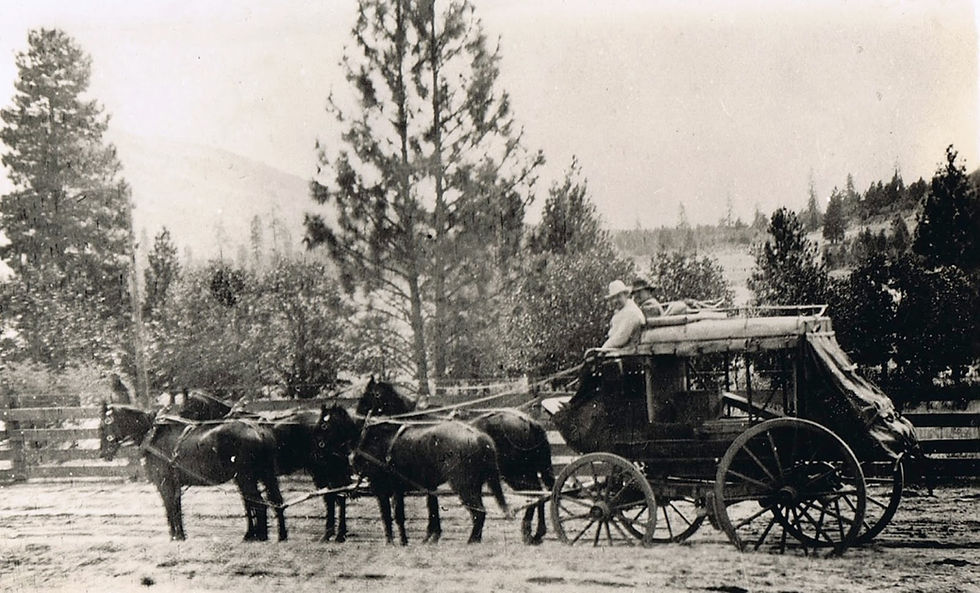
Stagecoaches became one of the enduring symbols of the American West, carrying passengers, mail, freight, money, and valuable shipments across long distances before railroads reached many Western communities.
Their valuable cargo also made stagecoaches tempting targets for highwaymen. Stagecoach robberies became part of Western legend, with outlaws targeting express boxes, payrolls, and gold shipments traveling between towns. Those stories—along with the drivers, horses, and dangerous roads themselves—helped cement the stagecoach's place in the popular image of the Wild West.
How Did People Travel During the California Gold Rush?
Getting to California—and traveling once you arrived—were two very different challenges during the Gold Rush.
Thousands of Forty-Niners reached California by sea, either sailing around Cape Horn or traveling to Panama, crossing the isthmus, and boarding another ship for the Pacific Coast. Others made the long overland journey west in covered wagons.
Once in California, however, stagecoaches became an important way to travel between growing cities, mining towns, and supply centers. Unlike the covered wagons associated with westward migration, stagecoaches operated on established routes and schedules, carrying passengers, mail, express shipments, and supplies.
As mining camps grew into permanent communities, better roads and expanding stage lines helped connect California's Gold Country with Sacramento, Stockton, San Francisco, and other commercial centers.
Covered wagons helped many emigrants reach the West. Stagecoaches helped connect the communities they found when they got there.
Historic Stagecoach Routes and Companies
Stagecoaches became an essential part of transportation in California's mining country, carrying passengers, mail, freight, and valuable shipments between rapidly growing towns. As roads improved, stage lines helped connect isolated mining communities with Sacramento, San Francisco, and eventually routes stretching across the country.
California Stage Company – Organized in the 1850s, the California Stage Company became one of the state's major stage operators, connecting Sacramento and other cities with mining communities throughout Northern California.
Butterfield Overland Mail – Beginning in 1858, the Butterfield Overland Mail carried passengers and mail between St. Louis and San Francisco along a long southern route through the American Southwest. The journey covered roughly 2,800 miles and helped establish regular overland communication between California and the eastern United States.
Wells Fargo & Company – Wells Fargo became closely associated with stagecoach travel in the American West, handling express shipments, mail, money, and gold. The company eventually operated and controlled major stage routes throughout the West, and its stagecoaches became an enduring symbol of the era.
Overland Stage Routes – By the late 1850s and 1860s, increasingly organized overland routes connected California with communities farther east. Stage travel remained difficult and time-consuming, but these routes helped move people, news, mail, and goods across enormous distances.
What about the Pony Express? Although often associated with stagecoach history, the Pony Express wasn't a stagecoach service. From April 1860 to October 1861, riders carried mail on horseback in relays between St. Joseph, Missouri, and Sacramento, California. Its brief existence became legendary, but the service relied on horses and riders—not passenger coaches.
Famous Stagecoach Drivers and Operators of California
Driving a stagecoach through California's mountains and mining country required exceptional skill. Drivers handled teams of horses over steep grades, rough roads, river crossings, snow, mud, and sometimes the threat of robbery. A few became legends themselves.

Charley Parkhurst – One of California's best-known stagecoach drivers, Parkhurst drove routes through the state's mining country and became famous for exceptional skill with a team of horses. After Parkhurst's death in 1879, it was discovered that the celebrated driver had been assigned female at birth, adding another remarkable chapter to an already legendary life.
Hank Monk – A celebrated driver based in Carson City, Nevada, Monk became famous for carrying passengers over the Sierra Nevada between Carson City and Placerville. One popular story claims that he once raced across the mountains with journalist Horace Greeley as an impatient passenger, helping cement Monk's reputation in Western folklore.
Ben Holladay – Better known as a stagecoach entrepreneur than a driver, Holladay built a transportation empire during the 1860s and became known as the “Stagecoach King.” His overland operations helped connect communities across the rapidly expanding American West.
These men, and many less-famous drivers whose names weren't preserved helped make stagecoach travel possible across some of the West's most difficult terrain.
From Leather to Luxury: The Stagecoach Candle
The stagecoach became one of the enduring symbols of California's Gold Rush—carrying travelers, mail, supplies, and sometimes gold through rugged mining country.
That history inspired our Stagecoach fragrance. Designed to evoke the saddle-worn grit and smoky character of 1850s California, it blends rosewood, lignin, worn leather, cedar, dark tonka, patchouli, and sandalwood.
Hand-poured in California's historic Gold Country, Stagecoach is our fragrant tribute to the coaches, horses, and drivers that helped connect the mining towns of the American West.


Comments